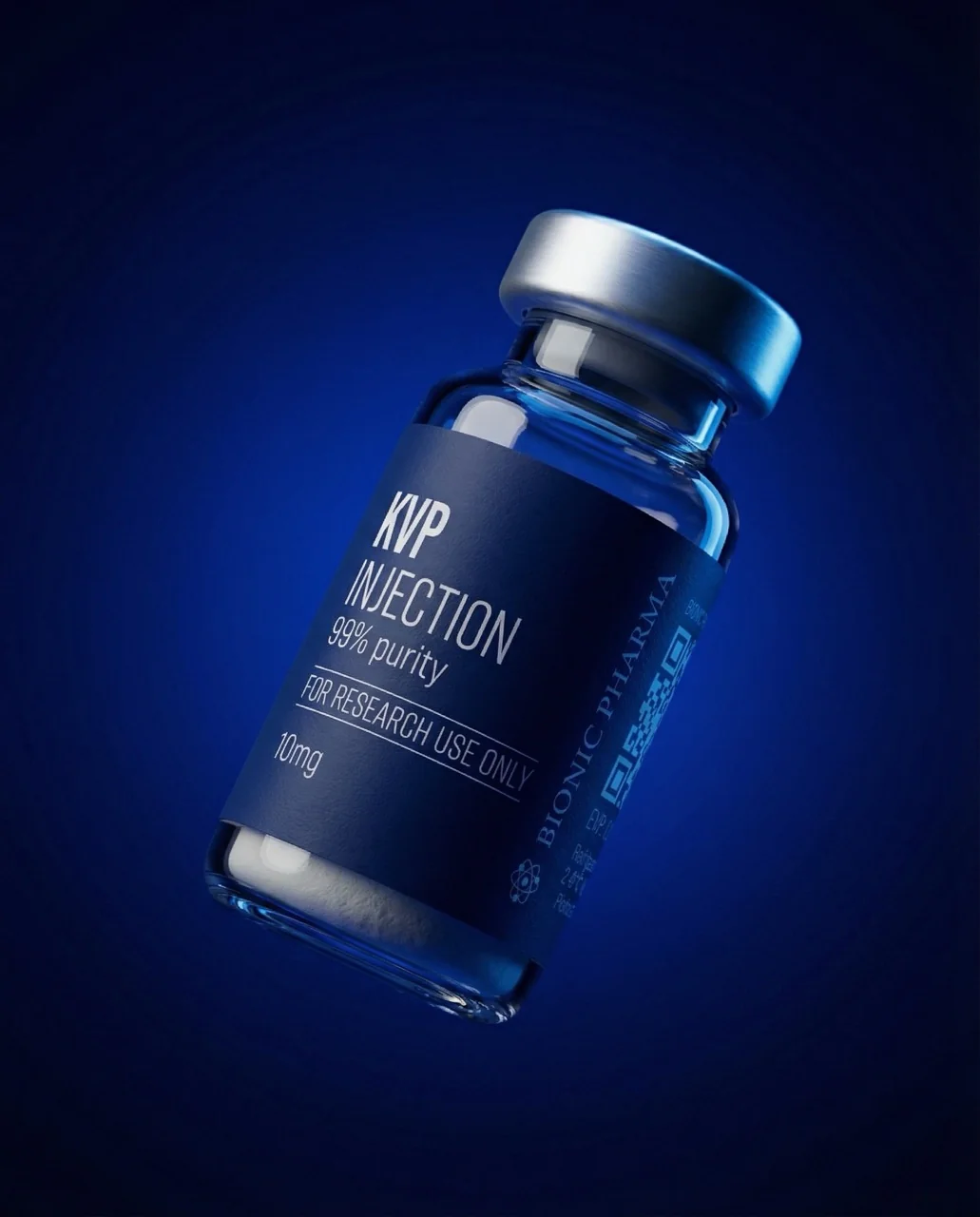
KPV

KPV

17
Anti-inflammatory tripeptide for the gut and skin
99% Purity Anti-Inflammatory Gut Health

KPV (Lysine-Proline-Valine) is the active C-terminal fragment of the hormone α-MSH, with potent anti-inflammatory action but without the pigmentary or sexual effects of its parent molecule. It modulates the immune response and reduces inflammation at the cellular level, with particular affinity for the gastrointestinal tract and the skin. It is an emerging alternative for inflammatory bowel disease (IBD), colitis, atopic dermatitis and acne.

Key Benefits
Potent intestinal anti-inflammatory
Useful in IBD, colitis and IBS
Improves dermatitis and psoriasis
Reduces inflammatory acne
Modulates the immune response
Favorable safety profile
Mechanism of Action
As the C-terminal fragment of α-MSH, KPV modulates the immune response and reduces inflammation at the cellular level, with particular affinity for the gastrointestinal tract and the skin. Unlike its parent molecule, it lacks pigmentary or sexual effects.
Protocol

Reconstitution & Usage Protocol

Important: Only chill the water for 3 minutes before reconstituting the peptide. Do not prepare with very cold water, because it may freeze, lose effect or be damaged.
1Reconstitution
Materials: 1 vial of KPV 10 mg · 1 vial of bacteriostatic water · U-100 insulin syringe · alcohol wipes.
  1. Let the vial reach room temperature for 10–15 minutes.
  2. Disinfect the rubber caps with an alcohol wipe.
  3. Draw 2 mL of bacteriostatic water (200 IU).
  4. Inject the water slowly down the inner wall of the vial.
  5. Do not shake. Swirl gently until the solution is clear.
Label with the date and refrigerate (2–8 °C). Stable for 28 days.
2Concentration & Dosing
Reconstituting 10 mg in 2 mL → 5 mg/mL = 50 mcg per IU.
Target doseUnitsVolume
500 mcg (low)10 IU0.10 mL
750 mcg (standard)15 IU0.15 mL
1 mg (high)20 IU0.20 mL
Universal formula: IU = (dose in mcg ÷ 50)
3Application
Route
Subcutaneous in the abdomen.
Frequency
1–2 times a day.
Cycle
500 mcg–1 mg, 1–2 times a day for 4–8 weeks.
  • Frequent stack: with BPC-157 for synergy in leaky gut and IBD.
  • Before applying: let the drawn dose lose its chill (only the amount to be injected) — hold the syringe in your hand for 2–3 minutes.
  • After applying: gently massage the area for ~40 seconds to disperse the peptide and improve absorption.
Importante: Solo poner a enfriar el agua 3 minutos antes de reconstituir el péptido. No preparar con agua muy fría, porque se puede congelar, perder efecto o dañarse.
1Reconstitución
Materiales: 1 vial de KPV 10 mg · 1 vial de agua bacteriostática · jeringa de insulina U-100 · toallitas de alcohol.
  1. Atemperar el vial 10–15 minutos.
  2. Desinfectar las tapas de goma con toallita de alcohol.
  3. Cargar 2 mL de agua bacteriostática (200 UI).
  4. Inyectar el agua lentamente por la pared interior del vial.
  5. No agitar. Girar suavemente hasta solución transparente.
Etiquetar con fecha y refrigerar (2–8 °C). Estable 28 días.
2Concentración y dosis
Reconstituyendo 10 mg en 2 mL → 5 mg/mL = 50 mcg por UI.
Dosis objetivoUnidadesVolumen
500 mcg (baja)10 UI0,10 mL
750 mcg (estándar)15 UI0,15 mL
1 mg (alta)20 UI0,20 mL
Fórmula universal: UI = (dosis en mcg ÷ 50)
3Aplicación
Vía
Subcutánea en abdomen.
Frecuencia
1–2 veces al día.
Ciclo
500 mcg–1 mg, 1–2 veces al día durante 4–8 semanas.
  • Stackeo frecuente: con BPC-157 para sinergia en intestino permeable y EII.
  • Antes de aplicar: dejar que la dosis cargada pierda el frío (solo la cantidad a inyectar) — sostener la jeringa en la mano 2–3 minutos.
  • Después de aplicar: masaje suave en la zona durante ~40 segundos para dispersar el péptido y mejorar absorción.
Important : Ne refroidir l'eau que 3 minutes avant de reconstituer le peptide. Ne pas préparer avec de l'eau très froide, car il peut geler, perdre son effet ou être endommagé.
1Reconstitution
Matériel : 1 flacon de KPV 10 mg · 1 flacon d'eau bactériostatique · seringue à insuline U-100 · lingettes alcoolisées.
  1. Laisser le flacon revenir à température ambiante pendant 10–15 minutes.
  2. Désinfecter les bouchons en caoutchouc avec une lingette alcoolisée.
  3. Prélever 2 mL d'eau bactériostatique (200 UI).
  4. Injecter l'eau lentement le long de la paroi intérieure du flacon.
  5. Ne pas secouer. Faire tourner doucement jusqu'à obtenir une solution transparente.
Étiqueter avec la date et réfrigérer (2–8 °C). Stable 28 jours.
2Concentration et dosage
En reconstituant 10 mg dans 2 mL → 5 mg/mL = 50 mcg par UI.
Dose cibleUnitésVolume
500 mcg (faible)10 UI0,10 mL
750 mcg (standard)15 UI0,15 mL
1 mg (élevée)20 UI0,20 mL
Formule universelle : UI = (dose en mcg ÷ 50)
3Application
Voie
Sous-cutanée dans l'abdomen.
Fréquence
1–2 fois par jour.
Cycle
500 mcg–1 mg, 1–2 fois par jour pendant 4–8 semaines.
  • Stack fréquent : avec le BPC-157 pour une synergie en cas d'intestin perméable et de MICI.
  • Avant l'application : laisser la dose prélevée perdre son froid (uniquement la quantité à injecter) — tenir la seringue dans la main pendant 2–3 minutes.
  • Après l'application : masser doucement la zone pendant ~40 secondes pour disperser le peptide et améliorer l'absorption.

Open dosage calculator →

Research Highlights

Research Highlights

FAQ

Frequently Asked Questions

What is KPV and how does it differ from its parent α-MSH?

KPV (Lysine-Proline-Valine) is the active C-terminal fragment of α-MSH that retains potent anti-inflammatory activity in research models while lacking the pigmentary and sexual effects of the parent hormone, which is why it is studied as a more targeted anti-inflammatory tripeptide. Bionic Pharma supplies it for laboratory research only.

Why is KPV studied in gastrointestinal and dermatological research?

KPV shows particular affinity for the gastrointestinal tract and the skin, so it is investigated in models of inflammatory bowel disease (IBD), colitis and irritable bowel syndrome as well as atopic dermatitis, acne and psoriasis. These are experimental research contexts only and not human-use indications.

How is KPV reconstituted and dosed in a research protocol?

The 10 mg vial is reconstituted with 2 mL of bacteriostatic water, yielding 5 mg/mL or 50 mcg per IU. Reference research protocols describe 500 mcg–1 mg subcutaneously, 1–2 times a day for 4–8 weeks, using the universal formula IU = (dose in mcg ÷ 50). These figures are reference values for laboratory work, not dosing advice.

Why is KPV sometimes paired with BPC-157 in research?

Because KPV acts through an immunomodulatory, anti-inflammatory mechanism distinct from growth-factor repair peptides, it is sometimes investigated alongside BPC-157 to explore synergy in leaky-gut and IBD models. Any such pairing is an experimental design choice for controlled research only, and Bionic Pharma provides no medical or human-use recommendations.

Related Compounds

Related Compounds

← Back to full catalog