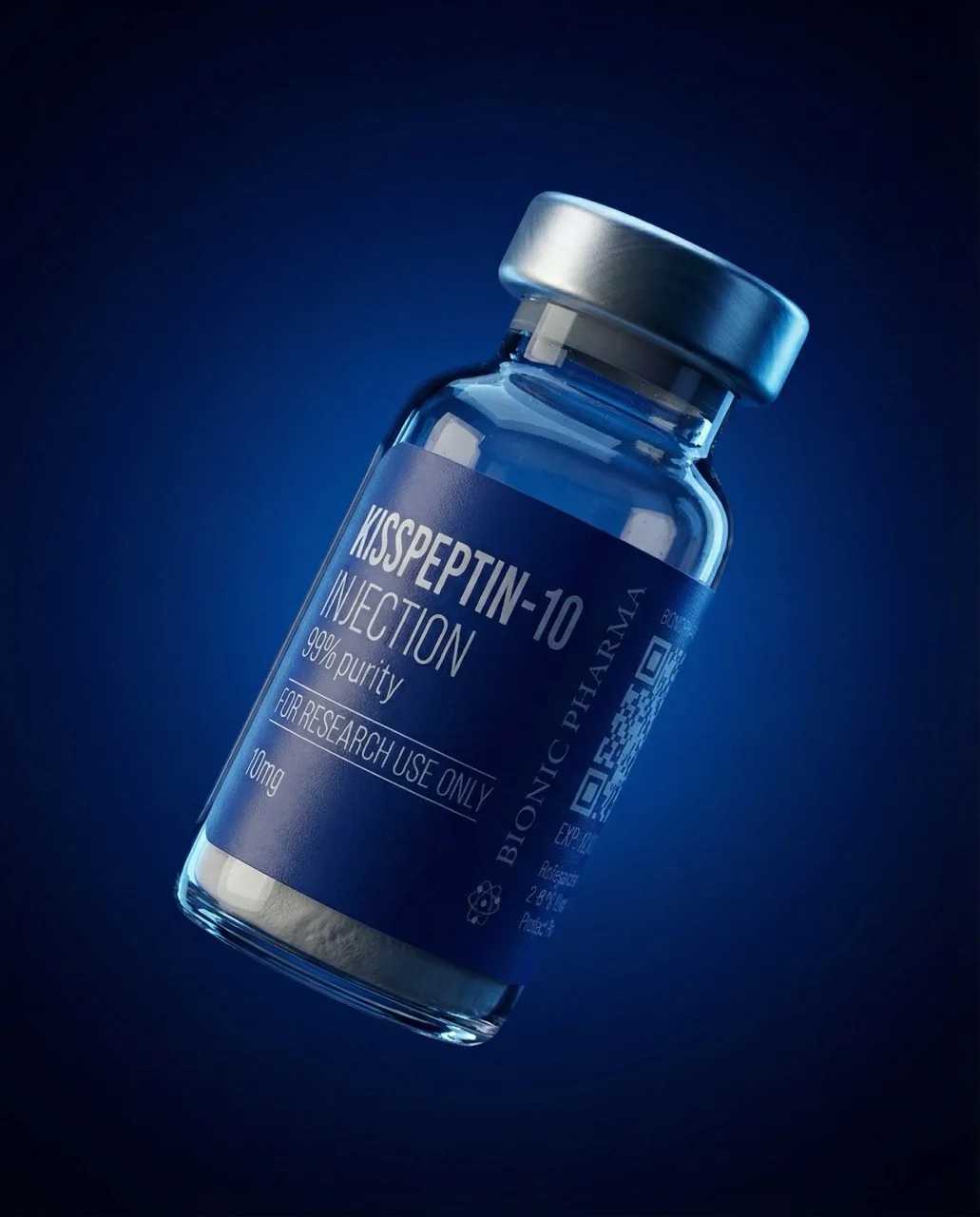
Kisspeptin-10
18HPG axis activator · Fertility and endogenous testosterone
Kisspeptin-10 is a decapeptide discovered in 1996 that acts as the 'master regulator' of the hypothalamic-pituitary-gonadal (HPG) axis. It stimulates the release of GnRH, which in turn activates LH and FSH, triggering endogenous testosterone production in men and estrogen production in women. It is an emerging tool for infertility, functional hypogonadism, libido, and post-steroid-cycle recovery.
Key Benefits
Increases endogenous testosterone
Improves libido and sexual function
Stimulates fertility in both sexes
Natural alternative to HCG in PCT
Activates the complete HPG axis
Does not suppress natural production
Mechanism of Action
It acts as the 'master regulator' of the hypothalamic-pituitary-gonadal (HPG) axis, stimulating the release of GnRH, which in turn activates LH and FSH. This triggers endogenous testosterone production in men and estrogen production in women.