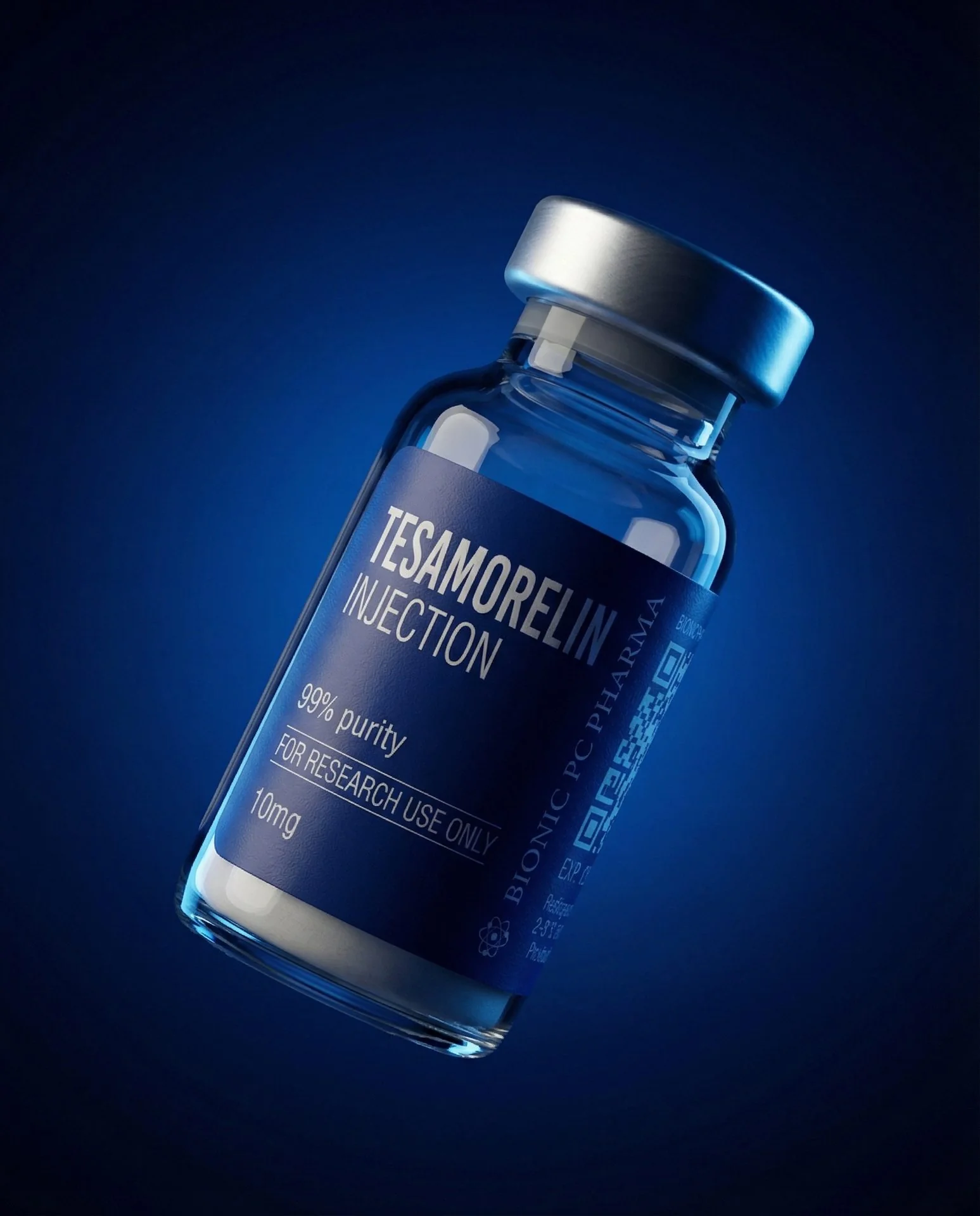
Tesamorelin
12Potent GHRH analog · Visceral fat reduction
Tesamorelin is a synthetic GHRH analog approved by the FDA for the treatment of HIV-associated lipodystrophy, known for its efficacy in reducing abdominal visceral fat. It stimulates the pituitary to release GH in a pulsatile manner, with potency superior to CJC-1295. It is the only secretagogue with robust clinical evidence for visceral fat reduction and improvement of hepatic markers in non-alcoholic fatty liver disease.
Key Benefits
Reduces abdominal visceral fat
Improves non-alcoholic fatty liver
Potently raises GH and IGF-1
Improves lipid profile
Boosts cognitive function
Preserves lean mass
Mechanism of Action
As a synthetic GHRH analog, it stimulates the pituitary to release growth hormone in a pulsatile manner, with potency superior to CJC-1295. The resulting rise in GH and IGF-1 activates selective visceral lipolysis and improves hepatic markers.
Certificate of Analysis (COA)
This batch was independently tested and certified by a US laboratory.
Verification code
BION2606080582