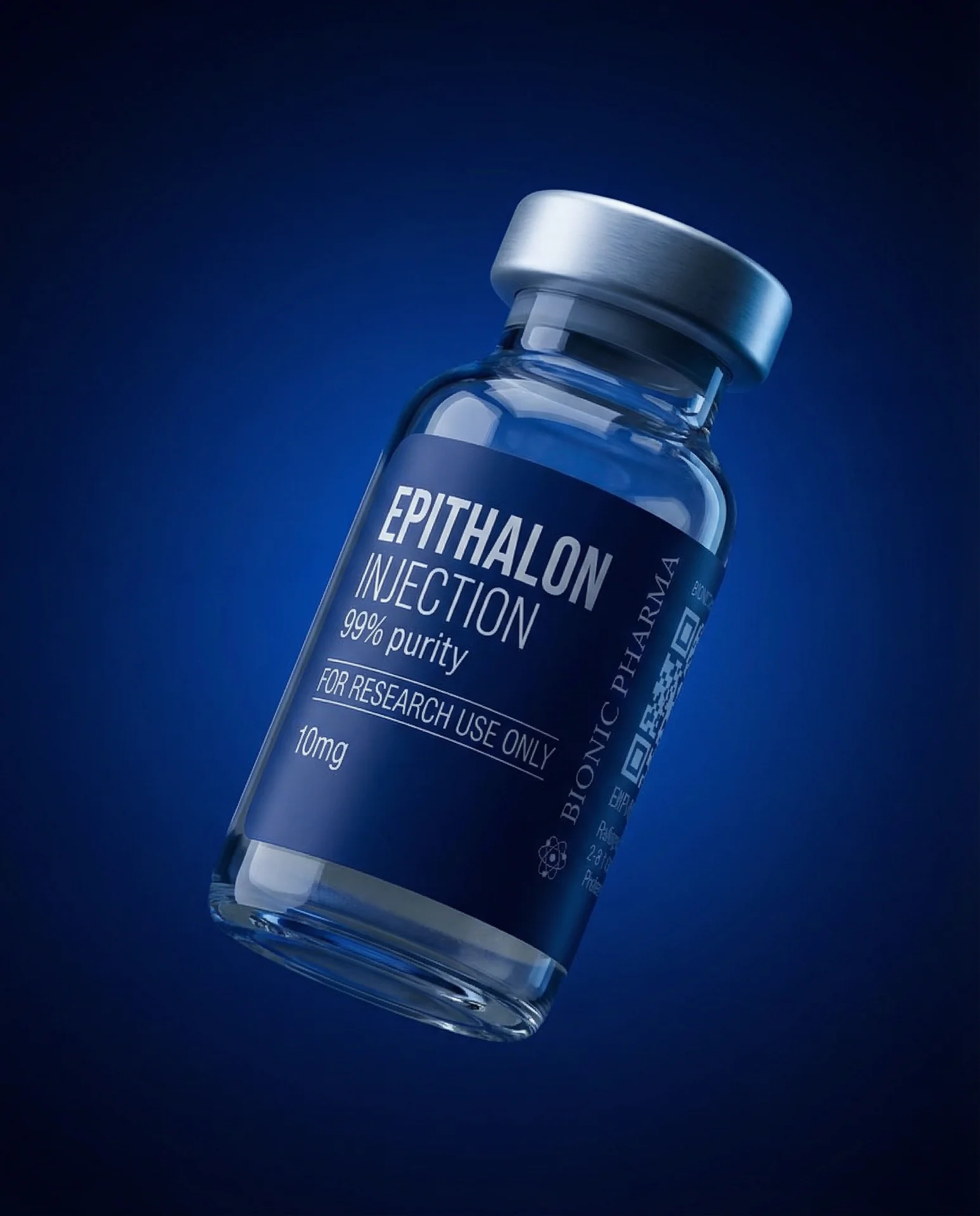
Epithalon (Epitalon) is a synthetic tetrapeptide developed in Russia from studies with pineal-gland extracts. Its main mechanism is the activation of the enzyme telomerase, which lengthens the telomeres (the protective ends of the chromosomes) and delays cellular senescence. Long-term studies in elderly subjects have shown reduced mortality and improvements in aging biomarkers.
| Target dose | Units | Volume |
|---|---|---|
| 5 mg (low) | 100 IU | 1.00 mL |
| 10 mg (standard) | 200 IU | Split into 2 doses |
| Monthly load 50 mg | 10 days × 100 IU | 1.00 mL/day |
| Dosis objetivo | Unidades | Volumen |
|---|---|---|
| 5 mg (baja) | 100 UI | 1,00 mL |
| 10 mg (estándar) | 200 UI | Dividir en 2 dosis |
| Carga mensual 50 mg | 10 días × 100 UI | 1,00 mL/día |
| Dose cible | Unités | Volume |
|---|---|---|
| 5 mg (basse) | 100 UI | 1,00 mL |
| 10 mg (standard) | 200 UI | Diviser en 2 doses |
| Charge mensuelle 50 mg | 10 jours × 100 UI | 1,00 mL/jour |
Epithalon (Epitalon) is a synthetic tetrapeptide derived from pineal-gland extract research. In study models it activates the enzyme telomerase, which lengthens the telomeres—the protective ends of the chromosomes—and is associated with delayed cellular senescence. It is supplied strictly for in-vitro and laboratory research use.
Because it originates from pineal-gland research, Epithalon is reported to modulate the pineal neuroendocrine axis and restore natural melatonin production. Study data associate this with improved sleep quality and re-synchronized circadian rhythms, which is why protocols favor evening timing. These observations describe research findings only and are not human-use claims.
Two patterns dominate the literature. A classic protocol uses 5–10 mg/day for 10–20 consecutive days, 1–2 times per year; an alternative uses 100 mcg–1 mg/day continuously for 1–3 months. The subcutaneous route in the abdomen is standard in study design. These figures describe the literature and are not dosing instructions for humans.
Add 2 mL of bacteriostatic water (200 IU) down the inner wall of the 10 mg vial, yielding 5 mg/mL or 50 mcg per IU, and swirl gently without shaking. Chill the water only 3 minutes beforehand—never use very cold water. Label with the date and refrigerate at 2–8 °C, where it stays stable for 28 days.