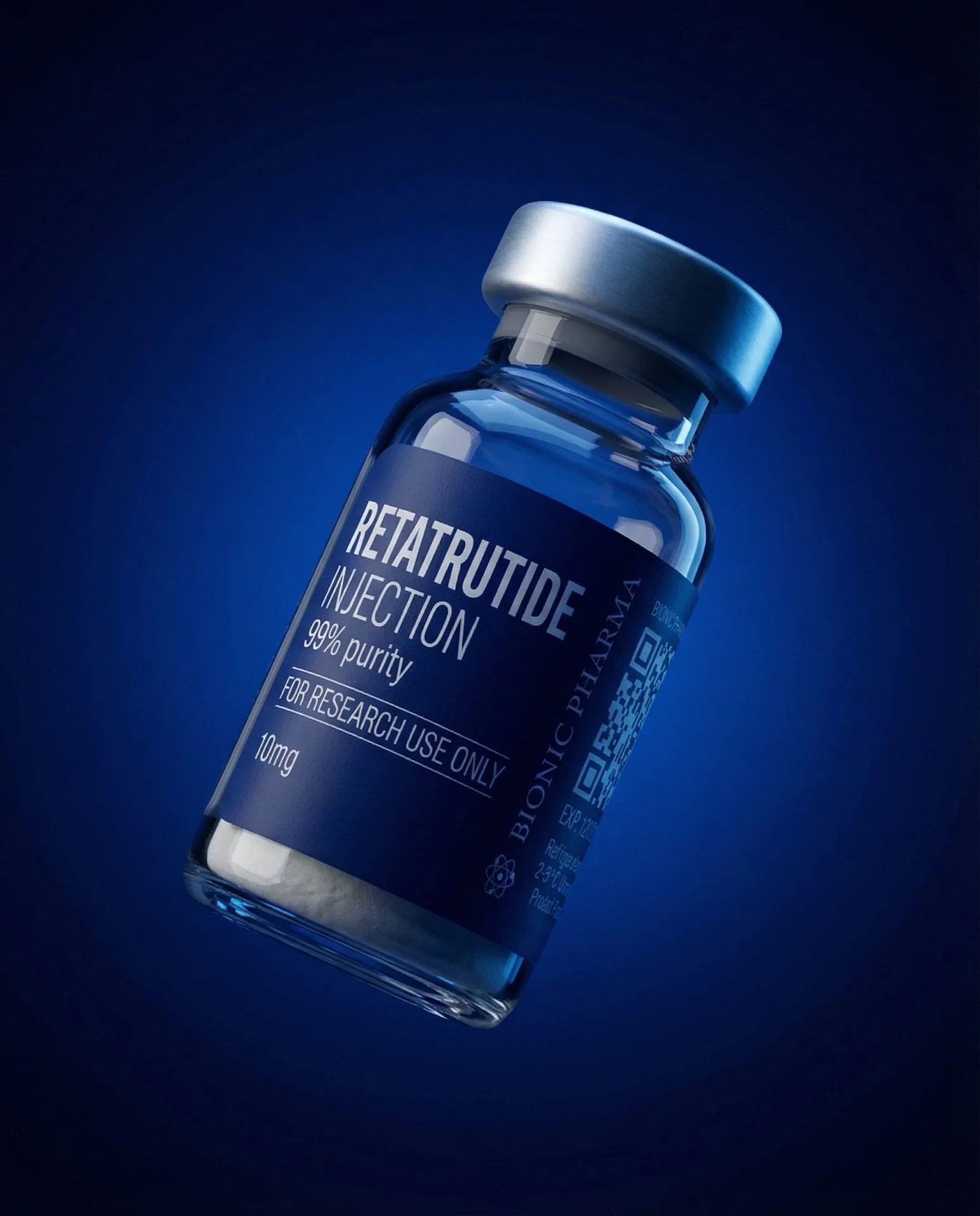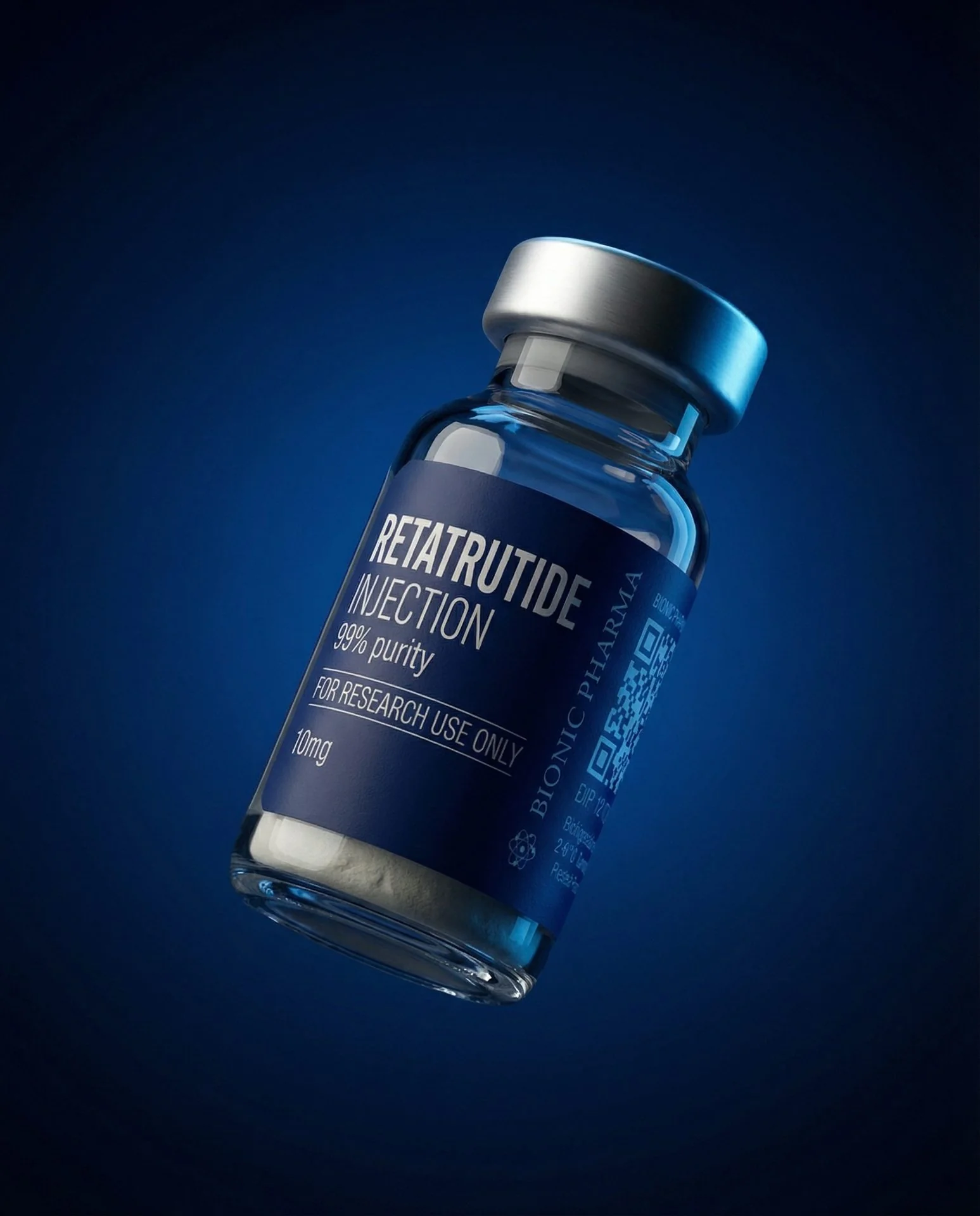
Retatrutide (LY3437943) is an experimental peptide developed by Eli Lilly that acts simultaneously on three metabolic receptors: GLP-1, GIP and glucagon. This triple action makes it the most potent agent of its class in obesity clinical trials, with average weight losses exceeding 24% of body weight over 48 weeks. Its mechanism combines appetite suppression (GLP-1), improved insulin sensitivity (GIP) and increased basal energy expenditure (glucagon), producing a synergistic effect on metabolism.
| Target dose | Units | Volume |
|---|---|---|
| 1 mg (initial) | 20 IU | 0.20 mL |
| 2 mg (titration) | 40 IU | 0.40 mL |
| 4 mg (standard) | 80 IU | 0.80 mL |
| 8 mg (advanced) | 160 IU | Split into 2 doses |
| Dosis objetivo | Unidades | Volumen |
|---|---|---|
| 1 mg (inicial) | 20 UI | 0,20 mL |
| 2 mg (titulación) | 40 UI | 0,40 mL |
| 4 mg (estándar) | 80 UI | 0,80 mL |
| 8 mg (avanzada) | 160 UI | Dividir en 2 dosis |
| Dose cible | Unités | Volume |
|---|---|---|
| 1 mg (initial) | 20 UI | 0,20 mL |
| 2 mg (titration) | 40 UI | 0,40 mL |
| 4 mg (standard) | 80 UI | 0,80 mL |
| 8 mg (avancée) | 160 UI | Diviser en 2 doses |
Retatrutide (LY3437943) is a research peptide developed by Eli Lilly that activates three metabolic receptors in parallel: GLP-1 (appetite suppression), GIP (insulin sensitivity) and glucagon (basal energy expenditure). This triple-receptor profile distinguishes it from the dual and single agonists studied in metabolic research, and reported study data describe average weight reductions above 24% of body weight over 48 weeks. It is supplied strictly for in-vitro and laboratory use.
In the laboratory reference, 10 mg is reconstituted in 2 mL of bacteriostatic water, yielding 5 mg/mL, which equals 50 mcg per IU on a U-100 insulin syringe. On this basis a 1 mg quantity corresponds to 20 IU (0.20 mL) and a 4 mg quantity to 80 IU (0.80 mL). The universal formula is IU = (dose in mg ÷ 5) × 100. These figures describe volumetric measurement for research only.
Dual agonists activate only GLP-1 and GIP, whereas Retatrutide adds a third arm: glucagon-receptor activation, which in study data is associated with increased basal energy expenditure, hepatic fat oxidation and greater observed fat loss. This glucagon component is what distinguishes it from the rest of the GLP-1 analogs and underlies its reported synergistic metabolic effect. Both classes are research-only compounds and are not interchangeable in study design.
The reference describes subcutaneous administration in the abdomen (5 cm from the navel), front thigh or back of the arm, once per week on the same day. The titration scheme starts at 1 mg for the first 4 weeks, rises to 2 mg in weeks 5–8, then 4 mg from week 9, and 8 mg for advanced users according to tolerance, within a standard 16–24 week cycle with monthly evaluation and site rotation. These figures describe the literature only and are not human-use instructions.