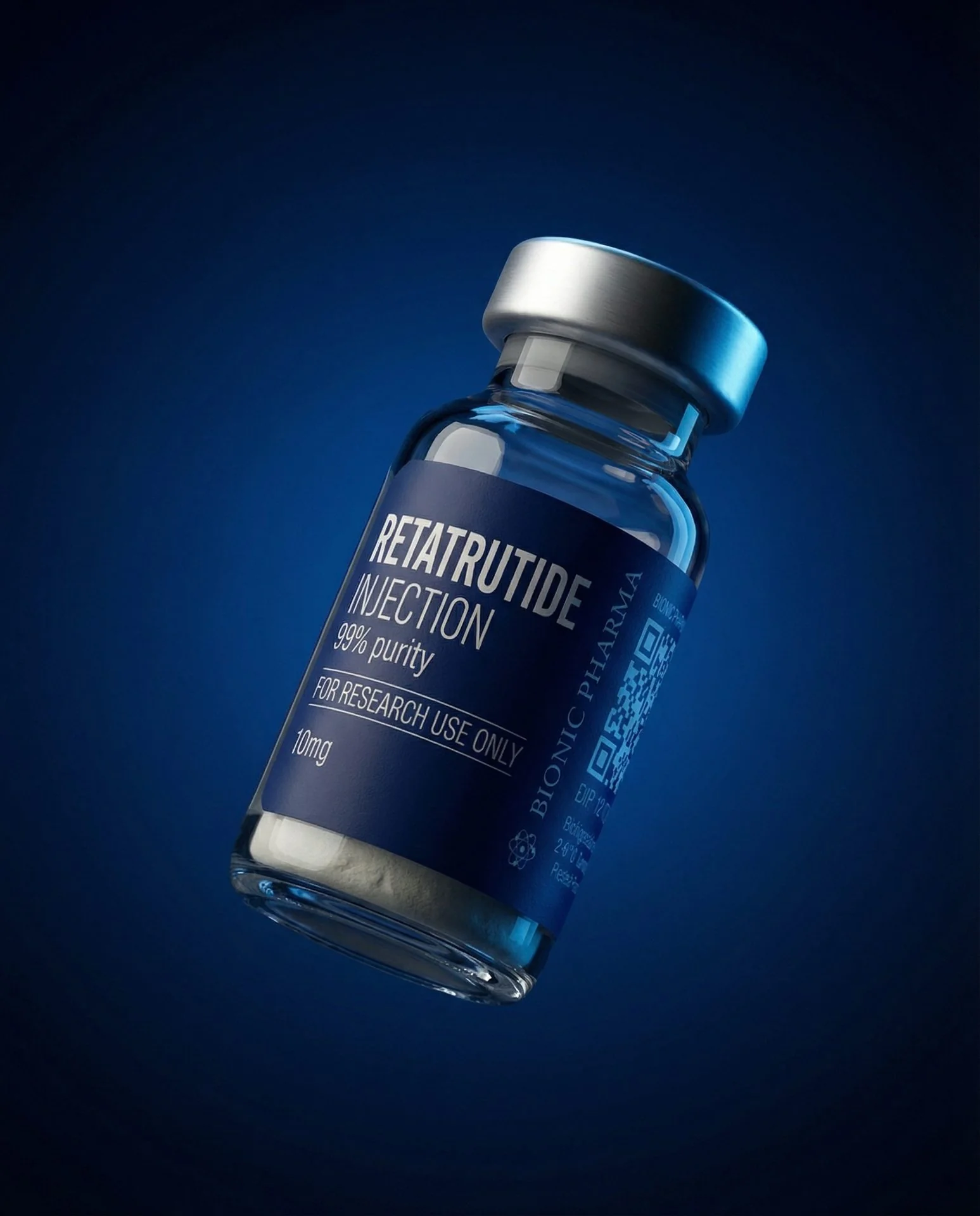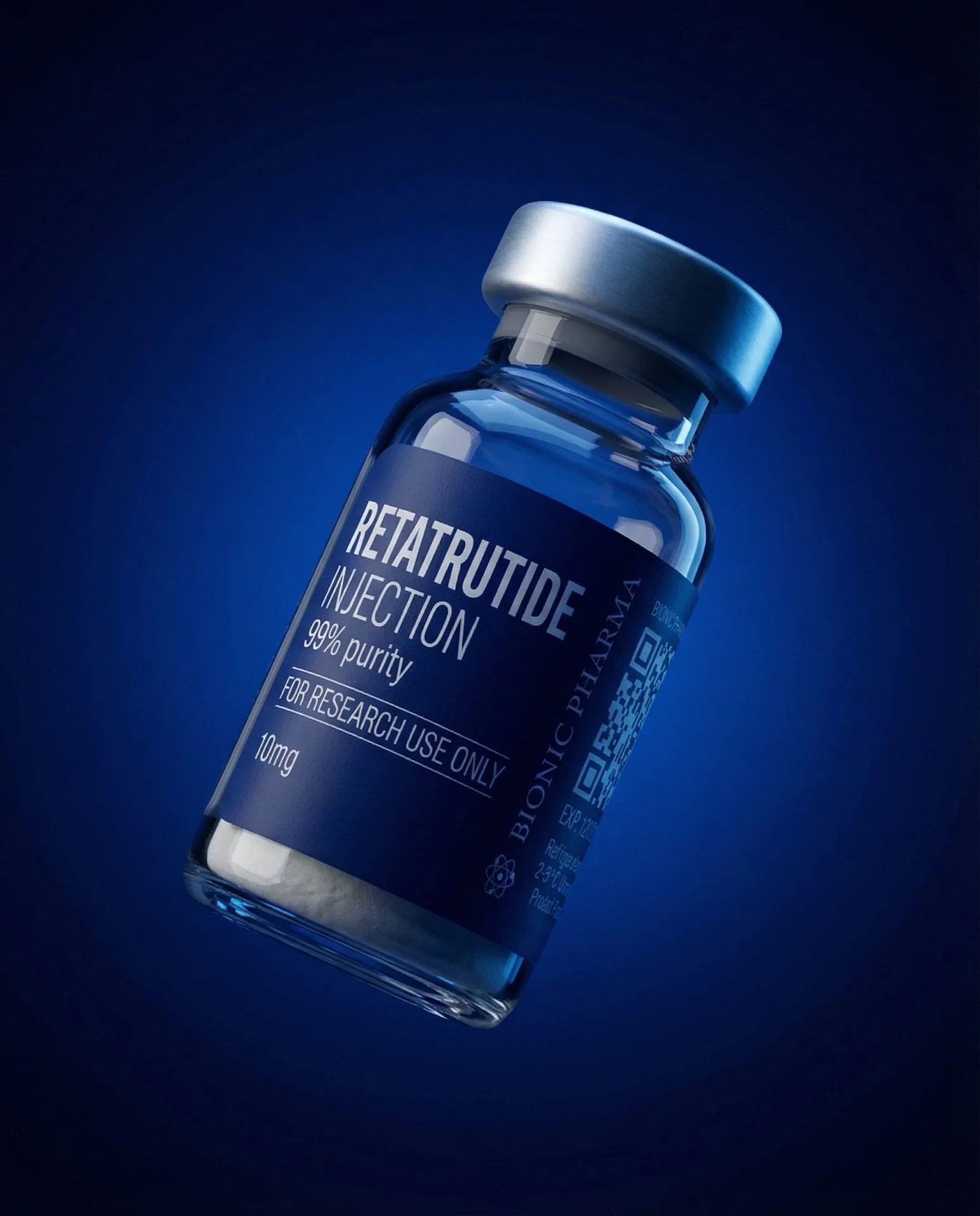
Retatrutide 30mg

Retatrutide 30mg

21
High-concentration presentation · Triple GLP-1 / GIP / Glucagon agonist
99% Purity Metabolic High-Concentration

High-concentration version of Retatrutide for advanced users or prolonged protocols. Same triple-agonist mechanism (GLP-1, GIP and glucagon) but with a vial that yields enough for longer cycles or higher doses. Indicated when seeking to optimize cost per dose or when the protocol requires progressive escalation up to maximum doses (8–12 mg weekly).

Key Benefits
Greater yield per vial for long cycles
High doses without excessive volumes
Cost optimization per milligram
Ideal for full titration protocols
Same efficacy profile as the 10 mg version
Compatible with doses up to 12 mg weekly
Mechanism of Action
Acts as a triple agonist of the GLP-1, GIP and glucagon receptors, combining appetite and blood-glucose regulation with increased energy expenditure. The 30 mg presentation offers the same efficacy profile as the 10 mg one but with greater yield per vial.
Protocol

Reconstitution & Usage Protocol

Important: Only put the water to chill 3 minutes before reconstituting the peptide. Do not prepare with very cold water, because it can freeze, lose effect or become damaged.
1Reconstitution
Materials: 1 vial of Retatrutide 30 mg · 1 vial of bacteriostatic water (BAC water) · U-100 insulin syringe · 3 mL syringe for reconstitution · alcohol wipes.
  1. Bring the vial to room temperature for 15–20 minutes.
  2. Disinfect the rubber caps of both vials with an alcohol wipe.
  3. Draw 3 mL of bacteriostatic water using a 3 mL syringe (or in 2 draws of 150 IU with an insulin syringe).
  4. Inject the water slowly down the inner wall of the Retatrutide vial. Never directly onto the powder.
  5. Do not shake. Let it rest 3–5 minutes and swirl gently until a clear solution is obtained.
Label with the reconstitution date and store in the refrigerator (2–8 °C). Stable for 28–60 days.
2Concentration & Dosing
Reconstituting 30 mg in 3 mL → 10 mg/mL = 100 mcg per IU.
Target doseUnitsVolume
1 mg (initial)10 IU0.10 mL
2 mg (titration)20 IU0.20 mL
4 mg (standard)40 IU0.40 mL
8 mg (high)80 IU0.80 mL
12 mg (maximum)120 IUSplit into 2 doses
Universal formula: IU = (dose in mg ÷ 10) × 100
3Application
Route
Subcutaneous in the abdomen, thigh or arm.
Frequency
Once per week, same day.
Cycle
20–32 weeks with monthly monitoring of weight and blood glucose.
  • Recommended titration: start with 1 mg for the first 4 weeks → increase to 2 mg → 4 mg → 8 mg → 12 mg every 4 weeks according to tolerance.
  • Important: dose increases should always be made in consultation with your advisor, evaluating gastrointestinal tolerance, blood glucose and weight.
  • Before applying: let the loaded dose lose its chill (only the amount to be injected) — hold the syringe in your hand for 2–3 minutes.
  • After applying: gentle massage of the area for ~40 seconds to disperse the peptide and improve absorption.
Importante: Solo poner a enfriar el agua 3 minutos antes de reconstituir el péptido. No preparar con agua muy fría, porque se puede congelar, perder efecto o dañarse.
1Reconstitución
Materiales: 1 vial de Retatrutide 30 mg · 1 vial de agua bacteriostática (BAC water) · jeringa de insulina U-100 · jeringa de 3 mL para reconstitución · toallitas de alcohol.
  1. Atemperar el vial a temperatura ambiente 15–20 minutos.
  2. Desinfectar las tapas de goma de ambos viales con toallita de alcohol.
  3. Cargar 3 mL de agua bacteriostática usando una jeringa de 3 mL (o en 2 cargas de 150 UI con jeringa de insulina).
  4. Inyectar el agua lentamente por la pared interior del vial de Retatrutide. Nunca directamente sobre el polvo.
  5. No agitar. Reposar 3–5 minutos y girar suavemente hasta solución transparente.
Etiquetar con fecha de reconstitución y almacenar en nevera (2–8 °C). Estable 28–60 días.
2Concentración y dosis
Reconstituyendo 30 mg en 3 mL → 10 mg/mL = 100 mcg por UI.
Dosis objetivoUnidadesVolumen
1 mg (inicial)10 UI0,10 mL
2 mg (titulación)20 UI0,20 mL
4 mg (estándar)40 UI0,40 mL
8 mg (alta)80 UI0,80 mL
12 mg (máxima)120 UIDividir en 2 dosis
Fórmula universal: UI = (dosis en mg ÷ 10) × 100
3Aplicación
Vía
Subcutánea en abdomen, muslo o brazo.
Frecuencia
1 vez por semana, mismo día.
Ciclo
20–32 semanas con monitoreo mensual de peso y glucemia.
  • Titulación recomendada: iniciar con 1 mg las primeras 4 semanas → subir a 2 mg → 4 mg → 8 mg → 12 mg cada 4 semanas según tolerancia.
  • Importante: los aumentos de dosis deben hacerse siempre bajo consulta con su asesor, evaluando tolerancia gastrointestinal, glucemia y peso.
  • Antes de aplicar: dejar que la dosis cargada pierda el frío (solo la cantidad a inyectar) — sostener la jeringa en la mano 2–3 minutos.
  • Después de aplicar: masaje suave en la zona durante ~40 segundos para dispersar el péptido y mejorar absorción.
Important : Ne mettre l'eau à refroidir que 3 minutes avant de reconstituer le peptide. Ne pas préparer avec de l'eau très froide, car elle peut geler, perdre son effet ou s'abîmer.
1Reconstitution
Matériel : 1 flacon de Retatrutide 30 mg · 1 flacon d'eau bactériostatique (BAC water) · seringue à insuline U-100 · seringue de 3 mL pour la reconstitution · lingettes d'alcool.
  1. Ramener le flacon à température ambiante pendant 15–20 minutes.
  2. Désinfecter les bouchons en caoutchouc des deux flacons avec une lingette d'alcool.
  3. Prélever 3 mL d'eau bactériostatique à l'aide d'une seringue de 3 mL (ou en 2 prélèvements de 150 UI avec une seringue à insuline).
  4. Injecter l'eau lentement le long de la paroi intérieure du flacon de Retatrutide. Jamais directement sur la poudre.
  5. Ne pas agiter. Laisser reposer 3–5 minutes et faire tourner doucement jusqu'à obtenir une solution transparente.
Étiqueter avec la date de reconstitution et conserver au réfrigérateur (2–8 °C). Stable 28–60 jours.
2Concentration et dosage
En reconstituant 30 mg dans 3 mL → 10 mg/mL = 100 mcg par UI.
Dose cibleUnitésVolume
1 mg (initial)10 UI0,10 mL
2 mg (titration)20 UI0,20 mL
4 mg (standard)40 UI0,40 mL
8 mg (élevée)80 UI0,80 mL
12 mg (maximale)120 UIDiviser en 2 doses
Formule universelle : UI = (dose en mg ÷ 10) × 100
3Application
Voie
Sous-cutanée dans l'abdomen, la cuisse ou le bras.
Fréquence
1 fois par semaine, le même jour.
Cycle
20–32 semaines avec un suivi mensuel du poids et de la glycémie.
  • Titration recommandée : commencer par 1 mg les 4 premières semaines → augmenter à 2 mg → 4 mg → 8 mg → 12 mg toutes les 4 semaines selon la tolérance.
  • Important : les augmentations de dose doivent toujours être faites en consultation avec votre conseiller, en évaluant la tolérance gastro-intestinale, la glycémie et le poids.
  • Avant l'application : laisser la dose chargée perdre son froid (uniquement la quantité à injecter) — tenir la seringue dans la main 2–3 minutes.
  • Après l'application : massage doux de la zone pendant ~40 secondes pour disperser le peptide et améliorer l'absorption.

Open dosage calculator →

Research Highlights

Research Highlights

FAQ

Frequently Asked Questions

How does the 30 mg presentation differ from the 10 mg one?

It shares the same efficacy profile and triple-agonist mechanism, but the higher mass per vial yields enough for longer cycles (20+ weeks) and high-titration schemes, optimizing cost per milligram. Reconstituting 30 mg in 3 mL gives 10 mg/mL, allowing large doses without exceeding the recommended injection volume.

What is the resulting concentration and how do I convert mg to IU?

Reconstituting 30 mg in 3 mL gives 10 mg/mL, which equals 100 mcg per IU. Use the universal formula IU = (dose in mg ÷ 10) × 100. For example, a 4 mg dose equals 40 IU or 0.40 mL.

How is the dose titrated up to the maximum?

Start with 1 mg for the first 4 weeks, then increase to 2 mg → 4 mg → 8 mg → 12 mg every 4 weeks according to tolerance. The 12 mg maximum dose is split into 2 doses. Increases should always be made in consultation with your advisor, evaluating gastrointestinal tolerance, blood glucose and weight.

How should the reconstituted vial be stored and how long is it stable?

Label the vial with the reconstitution date and store it in the refrigerator at 2–8 °C. It is stable for 28–60 days. Before drawing, only chill the bacteriostatic water 3 minutes prior to reconstitution; water that is too cold can freeze the peptide, reduce its effect or damage it.

Related Compounds

Related Compounds

← Back to full catalog