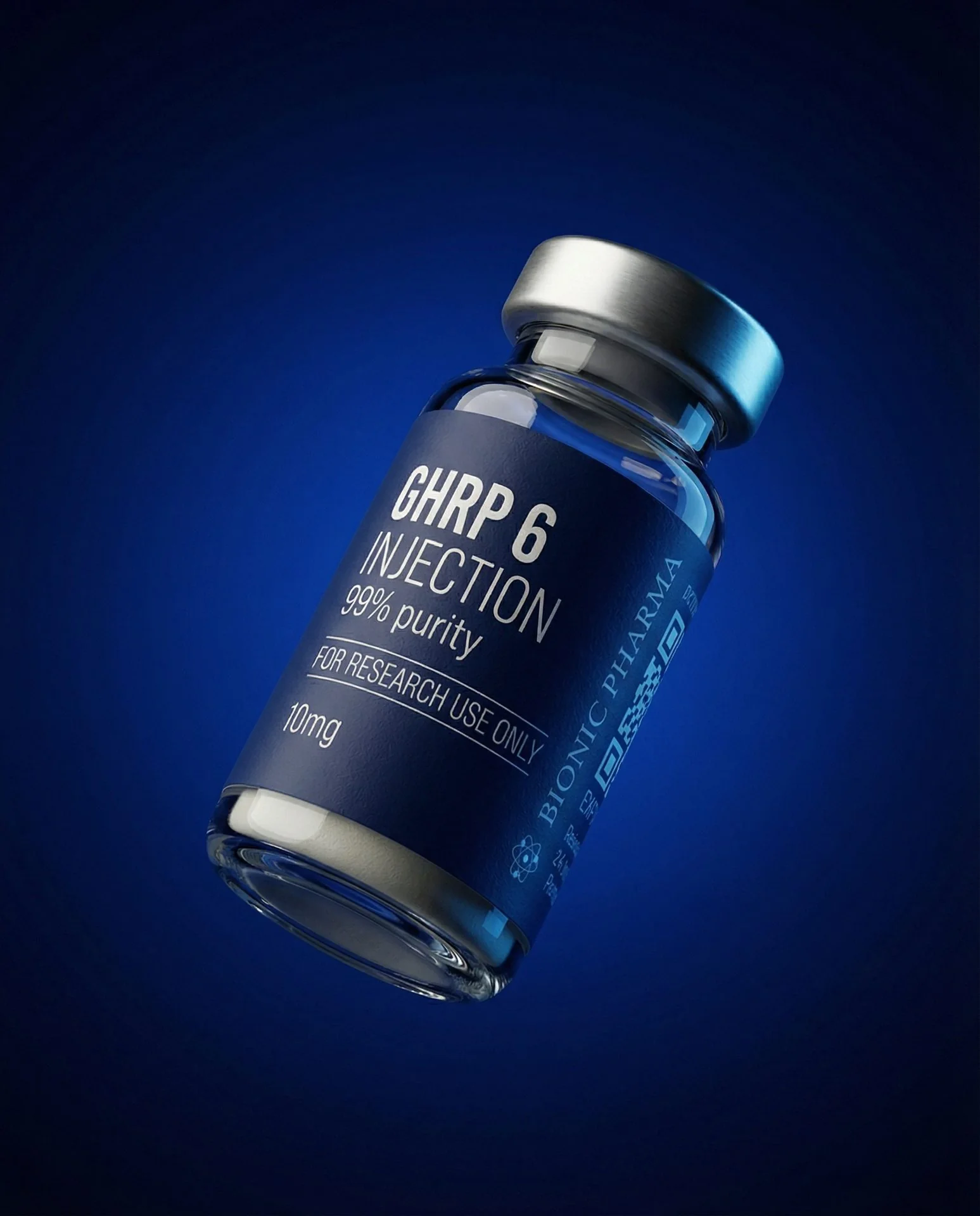
GHRP-6 (Growth Hormone Releasing Peptide-6) is a hexamer peptide that stimulates the pulsatile release of growth hormone (GH) from the pituitary gland by activating the ghrelin receptor. Unlike other GHRPs, GHRP-6 produces a pronounced secondary effect: a significant increase in appetite, which makes it a useful option for athletes in a muscle-gain (bulking) phase or for individuals who struggle to raise their caloric intake.
| Target dose | Units | Volume |
|---|---|---|
| 200 mcg (standard) | 6 IU | 0.06 mL |
| 300 mcg (high) | 9 IU | 0.09 mL |
| Dosis objetivo | Unidades | Volumen |
|---|---|---|
| 200 mcg (estándar) | 6 UI | 0,06 mL |
| 300 mcg (alta) | 9 UI | 0,09 mL |
| Dose cible | Unités | Volume |
|---|---|---|
| 200 mcg (standard) | 6 UI | 0,06 mL |
| 300 mcg (élevée) | 9 UI | 0,09 mL |
GHRP-6 is a synthetic hexamer growth-hormone secretagogue studied as a ghrelin-receptor (GHS-R1a) agonist. In study models it triggers a natural pulsatile release of pituitary GH while also activating hypothalamic hunger signaling, giving it a pronounced orexigenic profile. It is supplied strictly as a laboratory reference compound for in-vitro and non-human research use.
Because GHRP-6 acts on the GHS-R1a receptor — the same target as endogenous ghrelin, the body's hunger hormone — study models show it strongly activates hypothalamic appetite signaling alongside the GH pulse. This marked orexigenic response is more pronounced than with more selective secretagogues, which is precisely why it is selected when an appetite-stimulating profile is a variable of interest. All observations describe research models only.
In published protocols GHRP-6 is administered subcutaneously in the abdomen, and its short-acting, pulsatile profile means timing matters more than a long half-life. Models commonly schedule it 2–3 times per day — fasted, before sleep, or post-exercise — to align with natural GH rhythms, since carbohydrate or fat intake 30 minutes before or after can blunt the GH pulse. These parameters describe laboratory study design and are not human-use instructions.
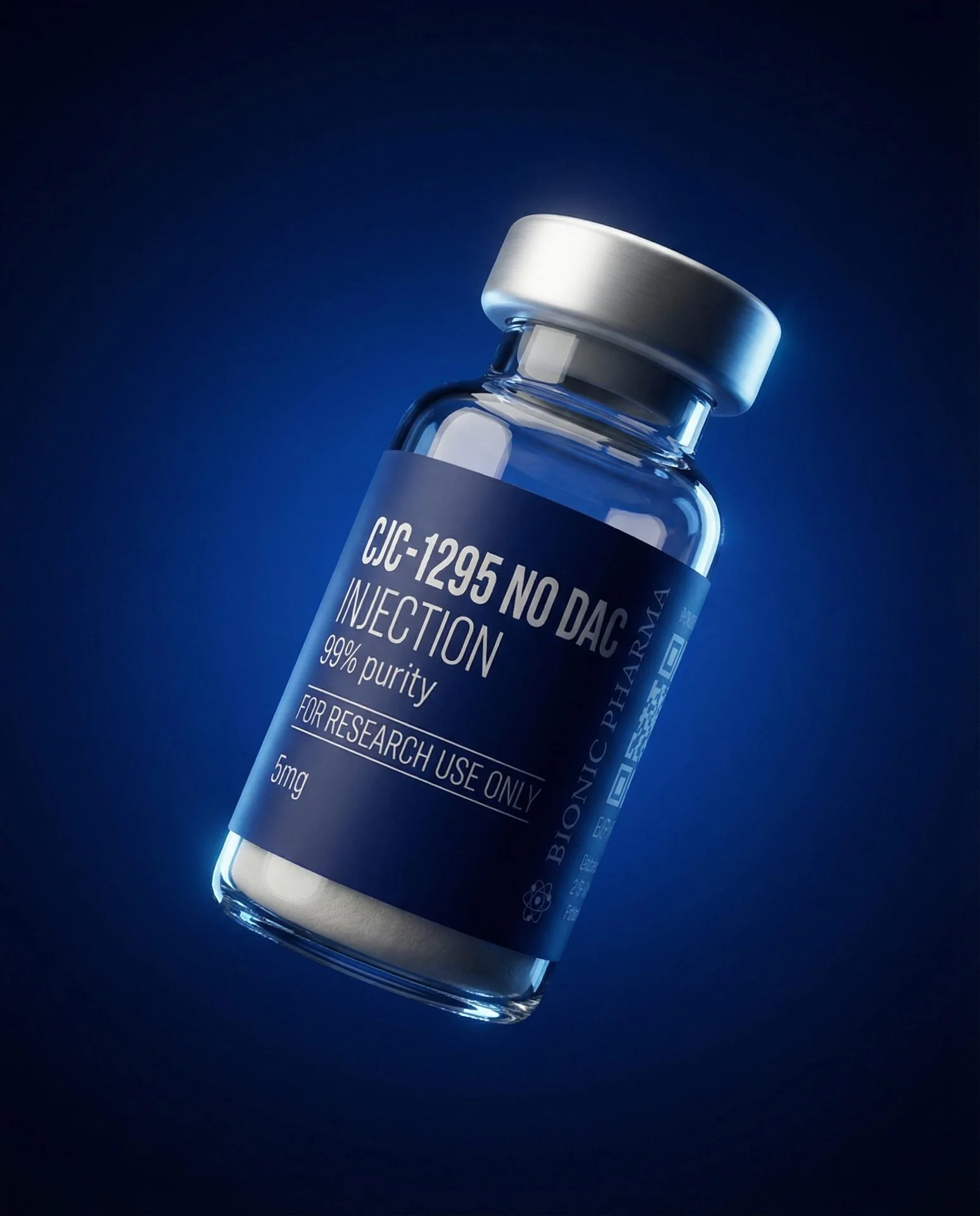
A frequently studied pairing is GHRP-6 with the GHRH analog CJC-1295 No DAC, where the secretagogue and GHRH pathways act synergistically to amplify the GH pulse beyond either compound alone. Each is reconstituted and handled separately under aseptic technique, and study cycles commonly run 8–12 weeks with a 4-week break. All such combinations are for controlled laboratory investigation only and never for human use.