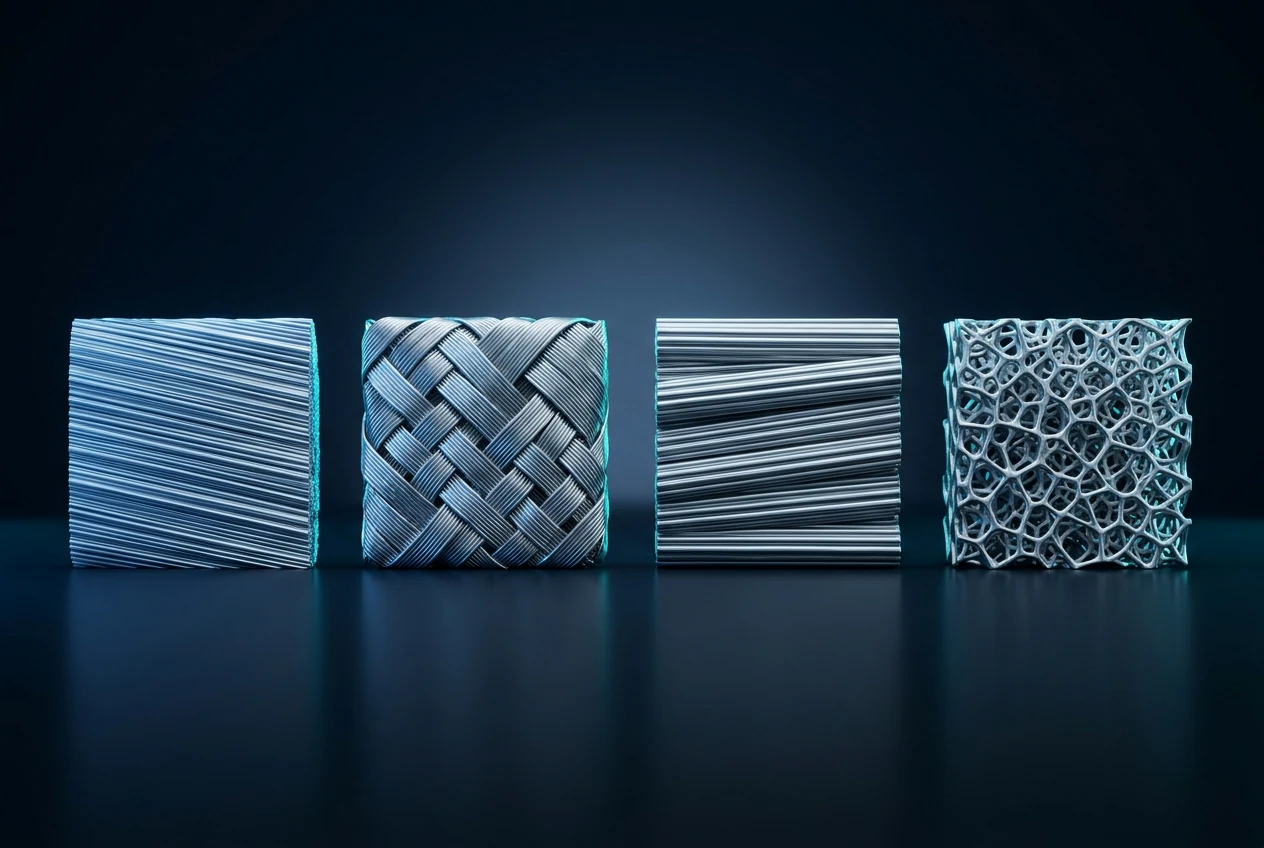
The four tissues repair at very different speeds because they have very different blood supplies. Compare tendon vs muscle healing time and the gap is hard to miss: muscle, densely vascularized, repairs in weeks. Tendon and ligament, with a sparse blood supply, need months. Bone sits in between, in a category of its own.
Blood supply explains almost everything
Repair needs three things that arrive only through the blood: oxygen, nutrients and cells. All three travel through blood vessels.
Almost everything else follows from that. A tissue with a dense vascular network gets what it needs quickly and repairs quickly. A tissue with a sparse blood supply depends on diffusion from neighboring tissue, a slow process limited by distance. Tendon vs muscle healing time is, at bottom, that difference: a dense network on one side, diffusion on the other.
That is why angiogenesis (the formation of new vessels) is the mechanism that nearly every repair compound proposes. It is also why the ceiling on the process is set by anatomy, not by signaling.
Muscle: weeks
Skeletal muscle is densely vascularized and also carries its own stem cell population, the satellite cells, which activate after damage and regenerate fibers.
The typical sequence in an uncomplicated muscle injury:
| Phase | Rough timeline |
|---|---|
| Inflammation and clearance of damaged tissue | First few days |
| Satellite cell activation and regeneration | Days to weeks |
| Remodeling and recovery of tensile strength | Weeks |
It is the tissue that repairs best and fastest of the four. And for that same reason it is where proving that an intervention adds anything is hardest: when a tissue repairs well on its own, the margin for improvement is narrow, and a control group is needed to avoid crediting the intervention with what would have happened anyway.
Tendon: months, and why
Tendon is dense connective tissue, built from highly organized type I collagen fibers, with very little vascularization. Its metabolism is slow, and some zones (the insertion regions and certain mid-substance segments) have particularly poor blood supply.
The result is long timelines:
| Phase | Rough timeline |
|---|---|
| Inflammation | Days |
| Proliferation and deposition of immature collagen | Weeks |
| Remodeling to adequate mechanical strength | Months |
Remodeling is the decisive phase and the one that cannot be skipped. The type III collagen laid down first is disorganized and weak; converting it into type I aligned along the lines of load takes time and progressive mechanical loading. The process is guided by the stimulus, not by chemical signaling alone.
Here is the key point of the whole article: a molecule that sped up collagen deposition would not shorten remodeling, because remodeling depends on load and time, not on how much raw material is available.
Ligament: the extreme case
Ligament shares tendon's composition and its sparse vascularization, with one thing making it worse: some ligaments have minimal or virtually absent blood supply in their intra-articular portion.
The most cited case is the anterior cruciate ligament, whose capacity to heal spontaneously after a complete tear is so limited that surgical reconstruction is the usual approach. It is not that it repairs slowly. It is that, to a large extent, it does not repair.
Other ligaments, better supplied with blood, do heal, on timelines comparable to tendon or longer.
Bone: union and remodeling
Bone is the interesting exception: it is the only one of the four that regenerates tissue identical to the original instead of scar. A well-united bone has no scar tissue in it. It has bone.
Its sequence:
| Phase | Rough timeline |
|---|---|
| Hematoma and inflammatory response | Days |
| Soft (cartilaginous) callus | Weeks |
| Hard callus (ossification) | Weeks to months |
| Remodeling to the original architecture | Months to years |
The factors that shape the outcome most are mechanical: fracture stability and contact between the fragments. Without stability there is no union, however good the biology.
What this means for any expectation of "speeding things up"
Three conclusions follow from the above, and they hold whatever compound is under consideration:
1. No molecule speeds up all four equally. The tissues have different rate-limiting mechanisms. What helps one may be irrelevant to another.
2. The limiting factor is usually anatomical, not biochemical. If a tendon repairs slowly for lack of vessels, extra signaling does not create vessels where there is neither room nor substrate for them.
3. Remodeling cannot be skipped. It is the phase that determines final mechanical strength, it depends on progressive load and time, and neither of those is replaced by an injection.
A claim along the lines of "speeds up recovery" that does not specify which tissue, which phase and measured how is not saying anything testable. The overview of what each compound proposes, and on what evidence, is in the pillar on tissue repair peptides, and the specific case of the best-selling combination is in the article on BPC-157 with TB-500.
What the evidence does not settle
The timelines in this article are rough figures drawn from the general literature. Individual variability is wide and depends on age, local blood supply, the size of the injury, stability and the load applied during recovery.
And one important gap: how much of functional recovery is explained by tissue biology and how much by rehabilitation has not been cleanly separated in the literature, because in clinical practice the two go together.
Frequently asked questions
Why does tendon take so long?
Because of its sparse vascularization, and because the decisive phase, the remodeling of collagen up to adequate mechanical strength, depends on time and progressive load rather than on the availability of material.
Does bone repair better than tendon?
In one sense yes: bone regenerates tissue identical to the original, while tendon and ligament form scar tissue that never quite reaches the properties of intact tissue.
Can ligament repair be sped up?
It depends on the ligament. Some, with reasonable blood supply, do heal. Others, such as the anterior cruciate in its intra-articular portion, have very limited capacity to heal spontaneously after a complete tear.
What matters more, biology or load?
Both, and they are not alternatives. Collagen remodeling is guided by mechanical load: without the stimulus, new tissue does not organize along the lines of force. That is a rehabilitation decision and it belongs to a professional.
References
- Sharma P, Maffulli N. Tendon injury and tendinopathy: healing and repair. Journal of Bone and Joint Surgery, 2005;87(1):187–202. DOI: 10.2106/JBJS.D.01850
- Järvinen TAH, et al. Muscle injuries: biology and treatment. American Journal of Sports Medicine, 2005;33(5):745–764. DOI: 10.1177/0363546505274714
- Einhorn TA, Gerstenfeld LC. Fracture healing: mechanisms and interventions. Nature Reviews Rheumatology, 2015;11:45–54. DOI: 10.1038/nrrheum.2014.164
- Frank CB. Ligament structure, physiology and function. Journal of Musculoskeletal and Neuronal Interactions, 2004;4(2):199–201. PubMed
Written by the Bionic Editorial Team. Last reviewed: August 2026.
How we work: our editorial policy and source hierarchy.
This content is strictly educational and does not constitute medical advice, diagnosis or a therapeutic recommendation. The compounds mentioned are research products (Research Use Only) and are not approved by INVIMA, FDA, EMA or ANSM for therapeutic use in humans. Any health-related decision should be made with a licensed medical professional.