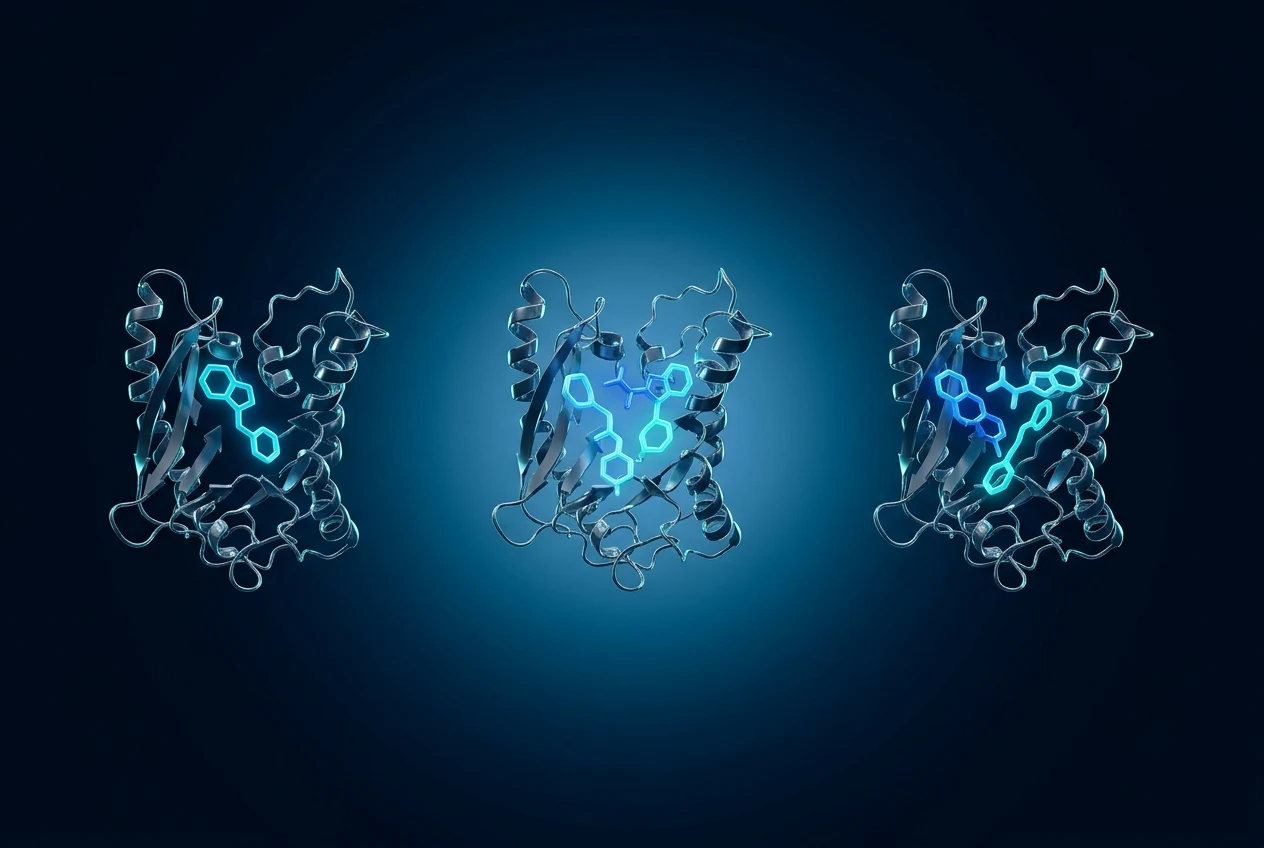
Agonists in the GLP-1 class are sorted by how many receptors they activate: mono-agonists (GLP-1 only), duals (GLP-1 + GIP) and triples (GLP-1 + GIP + glucagon). That is the GLP-1 receptor agonist class explained in a single line. Each receptor added contributes a different mechanism (satiety, nutrient handling, energy expenditure) and a different adverse-effect profile as well.
What an incretin is, and why the gut talks to the brain
In the sixties, researchers saw something that did not add up: glucose given by mouth triggered a far larger insulin response than the same amount given intravenously. If the pancreas reacted only to the level of glucose in blood, both routes should have produced the same response.
The explanation turned out to be that the gut sends advance notice. When it detects nutrients, it releases hormones that prime the pancreas before the glucose arrives. The phenomenon was named the incretin effect, and the two hormones responsible are:
- GLP-1 (glucagon-like peptide-1), secreted by the L cells of the ileum and colon.
- GIP (glucose-dependent insulinotropic polypeptide), secreted by the K cells of the duodenum and jejunum.
Both are degraded within minutes by the enzyme DPP-4. That is the key to the pharmacological design of this entire class: synthetic analogs are modified to resist that degradation, which turns a signal lasting minutes into exposure lasting days.
GLP-1 does not act on the pancreas alone. It has receptors in the hypothalamus and the brainstem, and through them it influences satiety and gastric emptying. That is why a gut hormone ends up changing appetite.
First generation: GLP-1 mono-agonism
The first analogs activated the GLP-1 receptor only. Liraglutide opened the path and semaglutide defined the generation.
The reference trial in obesity is STEP-1, published in the New England Journal of Medicine in 2021. Its data:
- Population: 1,961 adults with overweight or obesity, without type 2 diabetes.
- Intervention: semaglutide 2.4 mg weekly by subcutaneous route, plus a lifestyle intervention.
- Duration: 68 weeks.
- Result: mean body weight reduction of 14.9%, versus 2.4% in the placebo group.
Adverse effects were mostly gastrointestinal (nausea, diarrhea, vomiting), generally mild to moderate and more frequent during dose escalation.
Second generation: what the GIP receptor adds
For decades GIP was treated as the irrelevant sibling of GLP-1: in people with type 2 diabetes its insulinotropic effect is sharply reduced. The surprise was that adding GIP agonism to a GLP-1 agonist produced more effect than GLP-1 alone, even in populations where GIP on its own does little.
The exact mechanism is still under discussion. The hypotheses include a direct effect on adipose tissue, a complementary central action on appetite, and better gastrointestinal tolerance that allows higher doses of the GLP-1 component.
Tirzepatide is the reference dual agonist. In SURMOUNT-1 (NEJM, 2022):
- Population: adults with obesity or overweight, without type 2 diabetes.
- Doses: 5, 10 and 15 mg weekly.
- Duration: 72 weeks.
- Result: mean reduction between 16.0% and 22.5%, depending on dose and estimand.
That "depending on estimand" is not a fussy statistician's footnote, and it deserves a box of its own.
Why the same figure shows up two ways. Modern trials report two analyses. The efficacy estimand measures what happens in people who complete treatment as planned. The treatment-regimen estimand measures what happens in everyone assigned, including those who dropped out. The first gives higher numbers; the second looks more like practice. Comparing one drug's efficacy estimand with another drug's treatment-regimen estimand produces false comparisons, and it is a frequent error in this industry's marketing.
Third generation: the glucagon receptor
Adding glucagon receptor agonism looks counterintuitive. Glucagon raises blood glucose: it is the hormone given for severe hypoglycemia. Why add it to a metabolic drug?
Because glucagon does something besides mobilizing glucose: it increases energy expenditure. It acts on the liver, raising fatty acid oxidation and baseline energy consumption. The first two receptors act on the input side, how much is eaten and how it is handled; the third acts on the output side.
The design bet is that the GLP-1 component offsets the hyperglycemic effect of glucagon, leaving the rise in energy expenditure without its counterpart. Published data suggest the balance works, though it requires careful dose escalation.
Retatrutide is the most advanced triple agonist. Its track record:
Phase 2 (NEJM, 2023): 338 participants with obesity, 48 weeks, doses up to 12 mg. Mean reduction of 24.2% in the highest-dose group. That was the result that put the molecule on the map.
TRIUMPH-1 (preliminary results reported in May 2026): 2,339 randomized participants, 80 weeks, doses of 4, 9 and 12 mg versus placebo.
| Group | Mean weight reduction at 80 weeks |
|---|---|
| Retatrutide 4 mg | 17.6% |
| Retatrutide 9 mg | 23.7% |
| Retatrutide 12 mg | 25.0% |
| Placebo | 3.9% |
In a prespecified extension, 532 participants with BMI ≥35 who tolerated their dose were escalated to the maximum tolerated dose; at 104 weeks they reached up to 30% reduction.
TRIUMPH-4 studied a different population, obesity with knee osteoarthritis, and reported 28.7% at 68 weeks with 12 mg.
Mandatory warning about this table. The figures from STEP-1, SURMOUNT-1 and TRIUMPH-1 come from trials with different populations, durations and estimands. STEP-1 measured at 68 weeks, SURMOUNT-1 at 72, TRIUMPH-1 at 80. Putting them in a column suggests a direct comparison the data do not support. The only valid comparison between two molecules is a head-to-head trial; for semaglutide and tirzepatide one exists (SURMOUNT-5), but for retatrutide against either of them, it does not exist yet.
A second caveat on TRIUMPH-1: at the time of writing, its results are a preliminary sponsor communication, not a peer-reviewed publication. That distinction matters. A topline is a summary chosen by whoever funded the trial; the full publication includes the data that do not fit in a press release.
Why more receptors also means more adverse effects
This is the part the industry's marketing leaves out every time, and it is the most useful part for making a decision.
In TRIUMPH-1, at the highest dose, the adverse effects reported were nausea in 42.4%, diarrhea in 32.0%, constipation in 26.1% and vomiting in 25.3%. Around 10% reported dysesthesia and urinary tract infections, mostly mild to moderate and resolved.
Discontinuations due to adverse effects followed a clear staircase:
| Group | Discontinuation due to adverse effects |
|---|---|
| Placebo | 4.9% |
| Retatrutide 4 mg | 4.1% |
| Retatrutide 9 mg | 6.9% |
| Retatrutide 12 mg | 11.3% |
Almost one in nine participants on the high dose left the trial because they could not tolerate it. That number belongs to the same conversation as the 25%, and separating them gives a false picture. Any honest version of the GLP-1 receptor agonist explained keeps both tables on the same page.
There is also an effect the whole class shares and that gets little discussion: the weight lost includes lean mass. Trials that have measured body composition find that a meaningful fraction of the weight lost is lean tissue, not only fat. It is a limitation of the entire class, not of one particular molecule.
What no trial has settled yet
Maintenance. The STEP-1 extension documented that, after treatment was withdrawn, participants regained a substantial part of the weight they had lost and their cardiometabolic markers drifted back toward baseline. That reframes the question: it is not how much is lost in 68 weeks, but what happens afterward. And for the whole class, that answer is still uncomfortable.
The very long term. The longest follow-up available is counted in years, not decades. What sustained exposure over twenty years implies is unknown for every molecule in the class.
Retatrutide's hard outcomes. The program evaluating cardiovascular events is ongoing. Until it reads out, what exists is weight data and intermediate markers, which are not the same as a demonstrated reduction in events.
Who responds and who does not. Variability between individuals is wide, and there is still no reliable predictor of response.
You can read the technical sheet for the triple agonist for detail on the molecule, or the full breakdown of the four readouts of the TRIUMPH program.
Frequently asked questions
Is a triple agonist always better than a dual?
The available data do not allow that claim, because no trial compares retatrutide directly with tirzepatide. The figures from their respective trials come from different populations and durations. What the data do show is that adding receptors comes with more discontinuations for intolerance.
Why are they given once a week?
Because the structural modifications that resist DPP-4, together with albumin binding, extend the half-life into the range of days. That allows stable exposure with a single weekly administration.
What does it mean for a result to be *topline*?
That the trial sponsor has reported the main results before the full publication. It is legitimate information, but incomplete: it has not gone through peer review, and the sponsor chooses what to highlight. The later publication may qualify the figures.
Is retatrutide approved in any country?
No. At the time of this review it has no approval from the FDA, the EMA, INVIMA or any other regulatory agency for any indication. It is an investigational compound.
Why do the figures from the same trial differ depending on the source?
Almost always because of the estimand. A single trial publishes both the efficacy analysis and the treatment-regimen analysis, and their figures differ by several points. A source that quotes a number without saying which of the two it used is giving incomplete data.
References
- Wilding JPH, et al. Once-Weekly Semaglutide in Adults with Overweight or Obesity (STEP 1). New England Journal of Medicine, 2021;384:989–1002. DOI: 10.1056/NEJMoa2032183
- Jastreboff AM, et al. Tirzepatide Once Weekly for the Treatment of Obesity (SURMOUNT-1). New England Journal of Medicine, 2022;387:205–216. DOI: 10.1056/NEJMoa2206038
- Jastreboff AM, et al. Triple–Hormone-Receptor Agonist Retatrutide for Obesity — A Phase 2 Trial. New England Journal of Medicine, 2023;389:514–526. DOI: 10.1056/NEJMoa2301972
- Aronne LJ, et al. Tirzepatide as Compared with Semaglutide for the Treatment of Obesity (SURMOUNT-5). New England Journal of Medicine, 2025. DOI: 10.1056/NEJMoa2416394
- Wilding JPH, et al. Weight regain and cardiometabolic effects after withdrawal of semaglutide: The STEP 1 trial extension. Diabetes, Obesity and Metabolism, 2022;24(8):1553–1564. PMC9542252
- Phase III retatrutide study demonstrates 30% weight loss. The Pharmaceutical Journal, May 21, 2026. pharmaceutical-journal.com
- Eli Lilly and Company. Lilly's triple agonist, retatrutide, delivered powerful weight loss in pivotal Phase 3 obesity trial (TRIUMPH-1, press release). investor.lilly.com
Written by the Bionic Editorial Team. Last reviewed: August 2026.
How we work: our editorial policy and source hierarchy.
These figures come from clinical research protocols conducted under medical supervision. They are not a usage recommendation, nor a protocol applicable outside that context.
This content is strictly educational and does not constitute medical advice, diagnosis or a therapeutic recommendation. The compounds mentioned are research products (Research Use Only) and are not approved by INVIMA, FDA, EMA or ANSM for therapeutic use in humans. Any health-related decision should be made with a licensed medical professional.